
Cloud PBX
As remote and hybrid work become part of everyday operations, organizations need a communication platform that does more than connect office extensions. A modern phone system should support flexible work, protect business data, and let teams communicate from the office, home, branches, or anywhere they need to work.
Cloud PBX answers this need by moving business telephony to a centrally managed cloud platform. It helps employees work together smoothly across locations while keeping company numbers, call routing, recordings, and administration under one operating model.
A Cloud PBX Solution Built for Modern Teams
Bring every communication channel into one place
Connect your team through supported desktop, mobile, and browser clients so users can make calls, receive calls, join meetings, chat, and see colleague presence from the same business communication environment.
Integrate with business platforms
Cloud PBX can connect with CRM, Microsoft Teams, helpdesk, and identity platforms so call activity becomes part of daily business workflows instead of sitting in a separate phone system.
- CRM integration: Show customer information when calls arrive, launch supported calls from customer records, and keep call activity connected to the customer timeline.
- Microsoft 365 and Teams integration: Support business calling workflows for organizations that already work inside Microsoft tools.
- Helpdesk integration: Connect call activity with tickets and service records so support teams can review conversations more easily.
Administrative tools help organizations manage users, schedules, call routing, recordings, missed calls, access rights, and reporting from a central system. This reduces manual work and keeps communication governance more consistent.
Cloud PBX vs Traditional IP-PBX
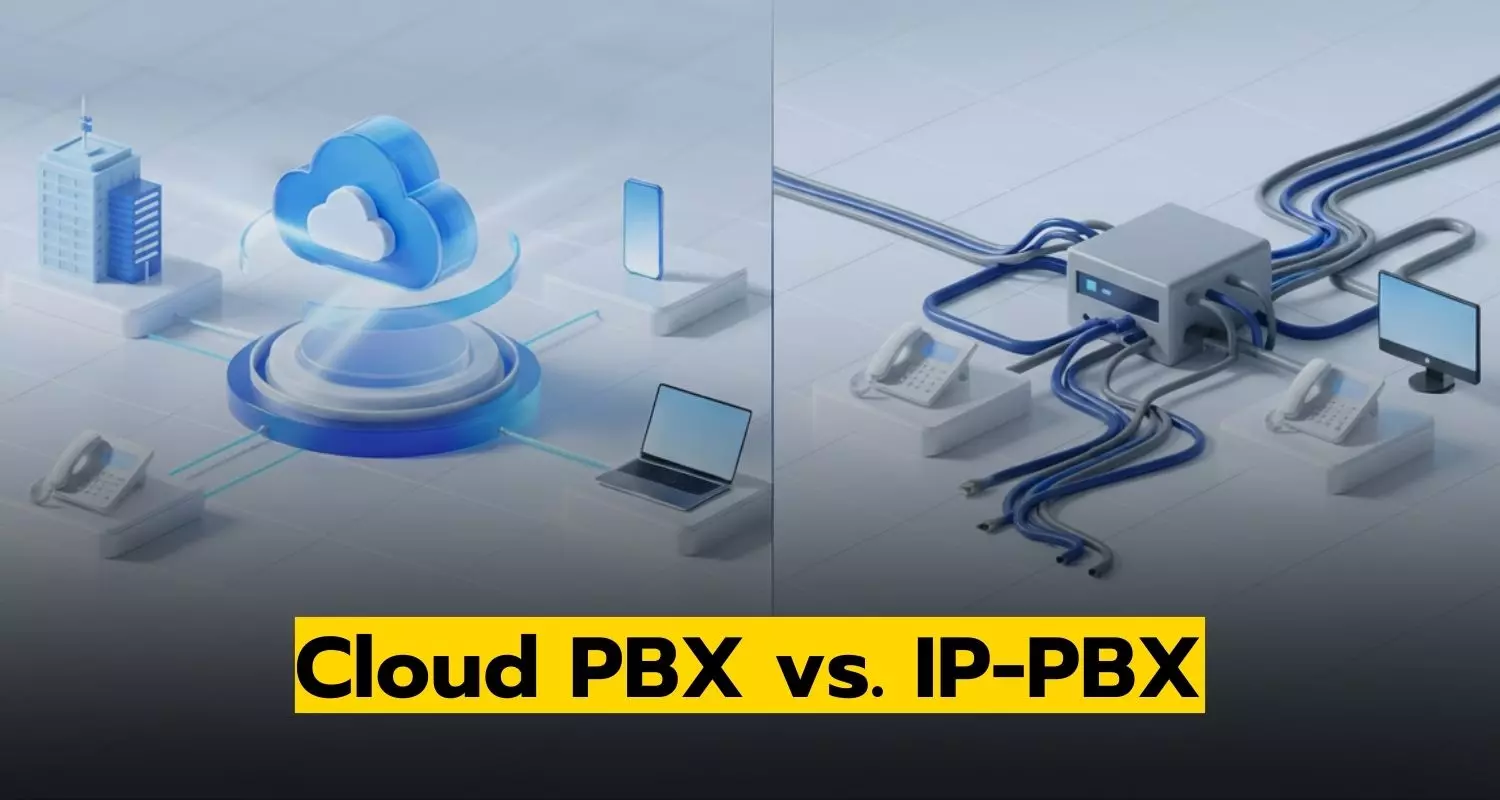
Choosing the right phone system affects cost, support workload, flexibility, and long-term scalability. The comparison below summarizes the practical differences between Cloud PBX and a traditional on-premise IP-PBX system.
- Cost
Cloud PBX uses a managed service model that is easier to forecast, while traditional IP-PBX often requires server investment, maintenance, and replacement planning. - System maintenance
Cloud PBX reduces the internal IT burden because platform updates, health checks, and service continuity are handled through the managed environment. - Usage flexibility
Cloud PBX supports office, branch, mobile, and remote users through internet-connected clients, while traditional systems are usually tied more closely to office infrastructure. - Scalability
Adding users, branches, numbers, and integrations is simpler when the phone system is designed as a cloud service from the start.
For organizations that want a phone system ready for hybrid work, centralized control, integrations, and easier long-term management, Cloud PBX is often a stronger fit than maintaining a traditional PBX environment.
